


Why Voice Search Matters More Than Ever

“Hey Siri, find the best pizza near me.”
“Alexa, what’s the weather today?”
“Hey Google, how do I fix a leaky faucet?”
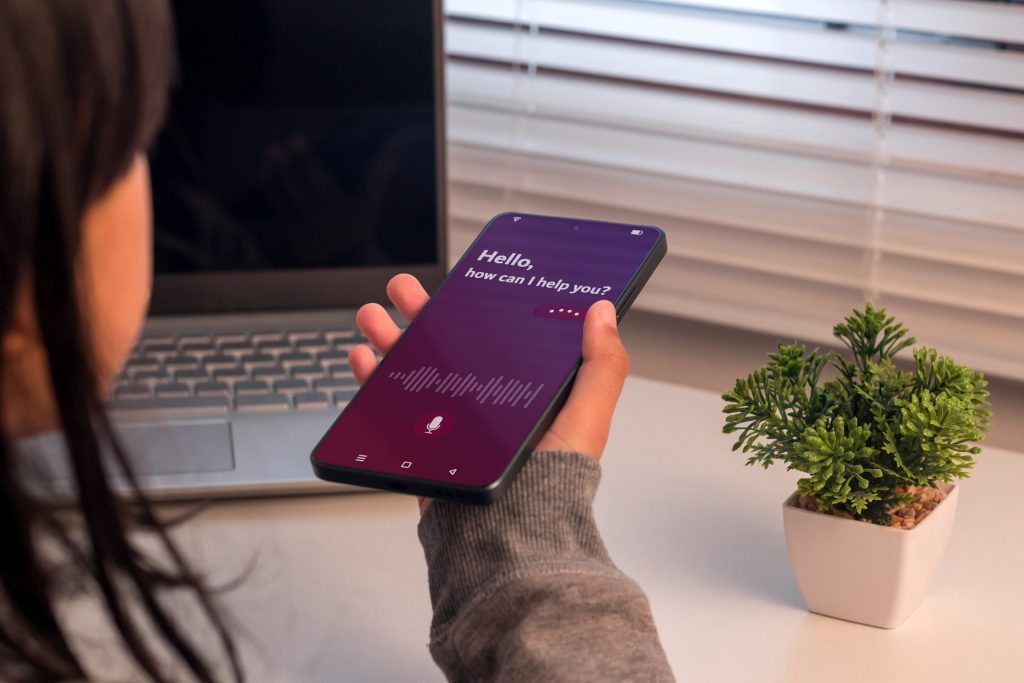
These phrases represent the new era of search. Instead of typing into a keyboard, billions of people now talk to their devices. Voice assistants like Siri, Alexa, and Google Assistant are shaping how we discover information, products, and services.
By 2025, voice search has become mainstream. According to Statista, the number of digital voice assistants in use worldwide surpassed 8.4 billion devices—outnumbering people on the planet. For small businesses, ignoring voice search is no longer an option.
This article explores the future of voice search optimization in 2025—what it means for SEO, how to adapt content, and why conversational marketing is the next big frontier.
What Is Voice Search Optimization?

Voice search optimization (VSO) is the process of tailoring your website and content to appear in results triggered by spoken queries. Unlike traditional search, voice queries are:
- Longer (conversational).
- More specific (“Where’s the nearest coffee shop open right now?”).
- Intent-driven (people want quick, actionable answers).
Optimizing for voice means thinking like your customers speak.
How Voice Search Differs from Traditional SEO
| Factor | Traditional SEO (Typed Search) | Voice Search SEO (Spoken Search) |
| Query Length | Short, keyword-based (e.g., “best shoes NYC”) | Conversational (e.g., “What are the best shoes to buy in New York right now?”) |
| Tone | Formal, fragmented | Natural, full sentences |
| Device Usage | Desktop, mobile | Mobile, smart speakers, wearables |
| Results | Lists of links | One spoken answer or snippet |
| Intent | Informational + exploratory | Action-oriented, local, immediate |
Voice SEO isn’t about replacing traditional SEO—it’s about evolving with natural language and intent.
The Rise of Conversational AI and Its Impact on SEO

The boom in voice search is fueled by conversational AI. Assistants powered by Google’s Natural Language Processing, Amazon Alexa AI, and Apple’s SiriKit are getting smarter at interpreting human speech.
This means businesses must optimize not just for keywords, but for semantic meaning—the context behind queries.
For example:
- Typed search: “SEO tips 2025.”
- Voice search: “What are the best SEO strategies for small businesses in 2025?”
To rank for the latter, your content must answer full questions in conversational language.
Local Search: The Biggest Opportunity for Small Businesses

Voice search is especially powerful for local businesses. Over 58% of consumers use voice search to find local business information (source: BrightLocal).
Common queries include:
- “Best coffee near me.”
- “What time does the hardware store close?”
- “Directions to the nearest gas station.”
Optimization strategies:
- Claim and optimize your Google Business Profile.
- Use schema markup for local info (address, hours, reviews).
- Add “near me” phrases naturally into content.
- Ensure your NAP (Name, Address, Phone) is consistent everywhere online.
Featured Snippets and Position Zero

When someone asks Alexa or Siri a question, the assistant often pulls the answer from Google’s featured snippet (position zero).
To optimize for this:
- Write concise answers (40–60 words) to common questions.
- Use headings like “How to…” or “What is…” followed by a clear answer.
- Structure content with bullet points or numbered lists.
If your content wins the snippet, it’s far more likely to be the spoken answer.
Natural Language and Long-Tail Keywords

Voice queries are conversational. Instead of optimizing only for “email marketing,” also target:
- “How do I start email marketing for my small business?”
- “What are the best tools for email automation under $50?”
Tools like AnswerThePublic and SEMrush help uncover question-based keywords that reflect voice search.
The Role of Mobile in Voice Search

Voice search is overwhelmingly mobile-driven. Optimizing for mobile is now inseparable from voice SEO.
Key steps:
- Ensure fast mobile load speeds (use Google PageSpeed Insights).
- Design responsive layouts.
- Include click-to-call buttons for service-based businesses.
A mobile-optimized website increases the likelihood of being chosen by voice assistants.
Voice Search and E-Commerce

Voice-driven shopping is on the rise. Amazon reports that millions of purchases are made through Alexa annually.
For e-commerce businesses:
- Optimize product descriptions with natural language.
- Add FAQs to product pages.
- Focus on simple voice-friendly queries like “What’s the best budget running shoe?”
Voice commerce (v-commerce) is projected to hit $164 billion globally by 2025 (source: Juniper Research).
Challenges in Voice Search Optimization
While voice presents opportunities, challenges remain:
- Privacy concerns: Smart speakers listen passively.
- Accuracy issues: Voice assistants can misinterpret accents or dialects.
- Limited SERP exposure: Voice often returns one answer, not ten.
Businesses must adapt while recognizing these limitations.
Practical Steps for Voice Search Optimization

- Research long-tail, conversational keywords.
- Create FAQ pages answering full-sentence questions.
- Optimize for local “near me” searches.
- Target featured snippets with concise answers.
- Ensure mobile and site speed are flawless.
- Implement schema markup for clarity.
The Future of Voice Search in 2025 and Beyond

Voice isn’t just about search—it’s becoming a commerce channel and customer experience tool.
Emerging trends include:
- Voice-enabled websites: Businesses adding voice navigation.
- Voice-powered shopping carts: Seamless voice checkout.
- Multimodal experiences: Blending voice with AR/VR in retail.
Voice search is no longer futuristic—it’s mainstream. Businesses that adapt early will dominate.
FAQs
Q1: Is voice search replacing traditional SEO?
No—it complements it. Traditional SEO remains essential, but voice requires adaptation.
Q2: Do small businesses really need to optimize for voice?
Yes—especially local businesses that rely on “near me” searches.
Q3: How do I know if my customers use voice search?
Check analytics for queries starting with “who,” “what,” “where,” “how.”
Q4: Is schema markup necessary for voice SEO?
Yes—it helps search engines understand content better.
Q5: Which industries benefit most from voice optimization?
Local services, restaurants, retail, and e-commerce.
Q6: Can voice SEO help with e-commerce sales?
Yes—v-commerce is growing rapidly.
Q7: What’s the future of voice assistants?
Deeper integration into homes, cars, and wearables.
The future of voice search optimization is clear: businesses must adapt to conversational, natural-language queries if they want to stay visible. Voice is reshaping SEO, from local searches to e-commerce, and the brands that prepare now will dominate tomorrow.
Whether it’s optimizing for featured snippets, creating FAQ-rich content, or preparing for v-commerce, voice is not just a trend—it’s the new search standard.
If you’d like expert help optimizing your website for both traditional and voice search, our team is here. Combined with GoHighLevel CRM—available for under $50/month—you’ll also gain automation tools that nurture leads generated from voice, SEO, and paid campaigns.
Contact us today to make your business discoverable in the age of voice.
Start Optimizing for Voice Search