


There’s a reason why stories have outlived every marketing trend.
Long before social media algorithms, SEO, and automation, stories connected humans across generations. They made ideas memorable, emotions tangible, and values timeless.
In today’s noisy digital world, storytelling in digital marketing has become not just an art — but a necessity. It’s how brands cut through clutter, earn trust, and transform their messages into movements.
When you master storytelling, your content stops feeling like marketing — and starts feeling like meaning.
Why Storytelling Works: The Science of Emotion and Memory

Humans are wired for stories. Neuroscientists at Princeton University discovered that when people listen to stories, their brain activity syncs with the storyteller’s — a phenomenon known as neural coupling.
In other words, stories literally put your audience “on the same wavelength.”
That’s why we remember narratives, not data.
A study by Stanford University found that information is 22 times more likely to be remembered when wrapped in a story.
Great storytelling doesn’t just inform — it transforms.
From Brand to Belief: The Power of Narrative in Modern Marketing

Today’s customers don’t buy products; they buy stories, missions, and belonging.
Apple doesn’t sell phones — it sells creativity and individuality.
Nike doesn’t sell shoes — it sells perseverance and self-belief.
Airbnb doesn’t sell lodging — it sells belonging.
Each of these brands uses storytelling to communicate why they exist, not just what they sell.
As Simon Sinek explains in his famous concept, the “Golden Circle,” great brands start with why — the purpose that drives them — and let that story shape everything they do.
The Elements of a Compelling Brand Story
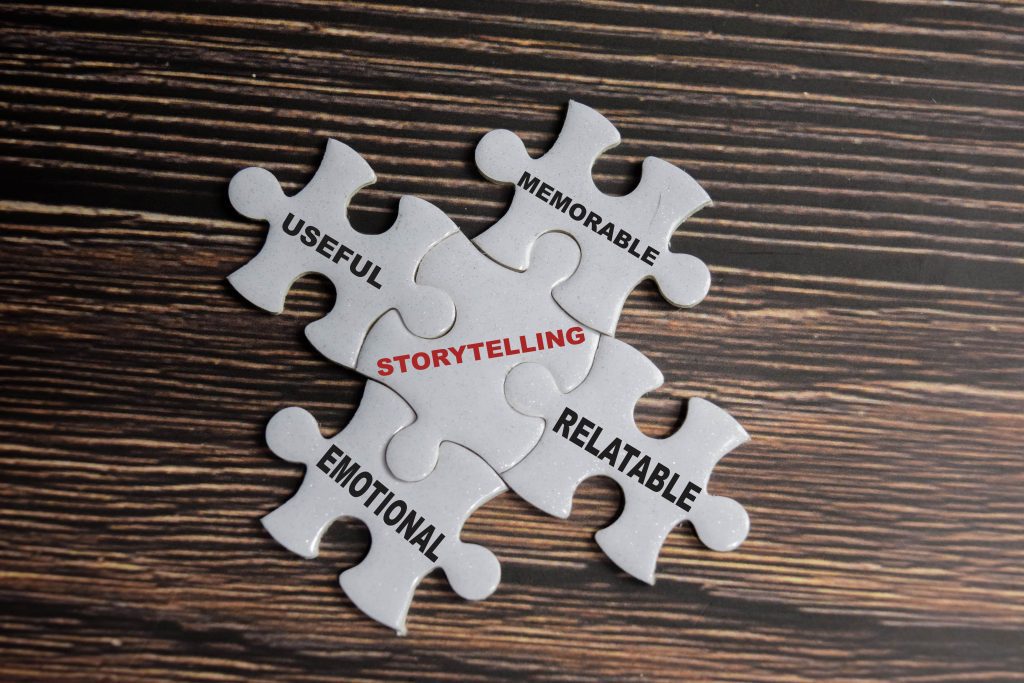
Every great story — from Hollywood films to startup campaigns — follows the same fundamental structure.
1. The Hero (Your Customer):
The main character isn’t your brand. It’s your audience.
They have goals, challenges, and aspirations that your brand helps them achieve.
2. The Problem (Their Pain):
Every story begins with conflict. What stands in the way of your hero’s success?
3. The Guide (Your Brand):
You’re the mentor — like Yoda to Luke or Morpheus to Neo. Your role is to guide, not dominate.
4. The Solution (Your Product or Service):
This is how your brand empowers the hero to overcome the challenge.
5. The Transformation (The Outcome):
How does your customer’s life change after the solution? That’s the emotional payoff your marketing should highlight.
This narrative flow — inspired by Joseph Campbell’s Hero’s Journey and Donald Miller’s StoryBrand Framework — creates emotional clarity and connection across all platforms.
Applying Storytelling Across Digital Channels

Let’s translate the narrative framework into real-world digital marketing strategies.
1. Website Copy
Your homepage should feel like a story in motion:
- Headline: The hook — define the problem.
- Body: The journey — show empathy and authority.
- CTA: The resolution — offer transformation.
Example:
“Struggling to grow online? We help small businesses scale with automation — for less than $50/month.”
The visitor immediately identifies the pain, the guide, and the solution.
2. Social Media
Platforms like Instagram, LinkedIn, and TikTok are today’s digital stages.
Use them to tell mini-stories that reveal your brand’s personality.
Types of social storytelling:
- Behind-the-Scenes: Humanize your team and process.
- Customer Journeys: Show real transformation stories.
- Micro-Narratives: Use short videos or carousels to tell a beginning-middle-end story in under 60 seconds.
Example: A personal trainer shares a “day one” clip of a client, then a “six months later” reveal. The result? Emotional resonance and instant credibility.
3. Email Marketing
Storytelling is the secret to high-performing email campaigns.
Instead of “Buy now” messages, send stories that inspire and educate.
Example structure:
- Subject line: “How we turned a $500 ad into $15,000 in 30 days.”
- Email body: Tell the problem, the process, and the transformation.
- CTA: Invite the reader to take the next step in their own story.
Tools like GoHighLevel CRM can automate story-based email sequences triggered by behavior, ensuring each subscriber gets a personalized narrative journey.
4. Blog and Content Marketing
Blogging is your long-form storytelling platform. Every article should answer three questions:
- Who is the hero (reader)?
- What challenge are they facing?
- How does your content guide them toward success?
Even educational posts can follow story arcs: start with a relatable pain point, then guide readers toward resolution.
5. Video Marketing
Video brings stories to life visually and emotionally.
Short-form platforms like Reels, TikTok, and YouTube Shorts amplify reach.
Types of video storytelling:
- Customer Testimonials: Real journeys and outcomes.
- Founder Stories: Why you started and what drives your mission.
- Explainers: Problem → solution → result in under 90 seconds.
Emotion drives retention — videos that trigger joy, surprise, or empathy outperform logic-driven content by 70% (Harvard Business Review).
The Psychology Behind Effective Brand Storytelling

Storytelling works because it activates emotional centers in the brain.
When people feel something, they remember it — and when they remember it, they act.
Here are key psychological principles in storytelling-driven marketing:
- Empathy: Stories allow audiences to project themselves into your narrative.
- Familiarity: Recurring brand voice and visuals build recognition.
- Anticipation: Suspense keeps users engaged longer.
- Identity: People buy into brands that reinforce their self-image.
That’s why effective brand stories make customers feel seen, not sold to.
Building a Consistent Brand Narrative

Consistency turns storytelling into strategy.
Whether on your website, emails, or social posts, your story must sound cohesive.
Ask yourself:
- Does every message reflect our brand’s mission and voice?
- Do visuals and tone align across channels?
- Is the hero (our customer) clear in every piece of content?
Tools like Notion or Airtable help teams maintain a unified storytelling guideline — color palette, voice tone, and messaging pillars — ensuring every campaign sounds like one voice.
Turning Stories Into Movements

A story becomes a movement when it inspires participation.
Movements form when audiences see themselves in your mission — and choose to share it.
Brands that turn messages into movements:
- Dove’s “Real Beauty” campaign: Redefined beauty standards.
- Patagonia’s activism: Encourages environmental responsibility.
- GoPro’s storytelling community: Empowers users to share adventures.
Your goal isn’t to make your story viral — it’s to make it valuable. Movements happen when stories serve a purpose bigger than sales.
How Small Businesses Can Leverage Storytelling

You don’t need a Hollywood budget to tell powerful stories. What you need is authenticity and structure.
Here’s how small businesses can apply storytelling today:
- Tell Your Origin Story: Why did you start? What challenge inspired you?
- Highlight Customer Transformations: Share real wins with permission.
- Create a “Why We Exist” Page: Go beyond “About Us.”
- Use Testimonials as Micro-Stories: Focus on outcomes and emotions.
- Humanize Your Brand Voice: Write like you talk, not like an ad.
Audiences don’t expect perfection—they expect personality.
Storytelling Meets Automation

Automation can support storytelling, not replace it.
With tools like GoHighLevel CRM, you can:
- Automate personalized storytelling emails.
- Trigger narrative-based follow-ups based on behavior.
- Segment audiences by emotional motivators.
Example:
A lead downloads your guide on “How to Double Revenue.”
Automation sends a 5-day story series walking them through a case study, ending with an invitation to book a free consultation.
That’s storytelling at scale — humanized, automated, and effective.
Common Mistakes in Storytelling Marketing

- Making the Brand the Hero: The customer should always be the protagonist.
- Being Inconsistent: Fragmented stories confuse audiences.
- Forgetting Emotion: Facts tell, stories sell.
- Overcomplicating the Message: Clarity beats cleverness.
- Ignoring Visuals: Your design, colors, and imagery tell stories too.
Even the best-written narrative fails if it doesn’t feel human and coherent.
The Future of Storytelling in Digital Marketing

In 2025 and beyond, storytelling will evolve beyond words—it will merge with immersive technology.
Emerging trends include:
- AI-Generated Visuals: Personalized video stories through AI tools like Synthesia.
- Interactive Content: Choose-your-own-adventure experiences on brand websites.
- Augmented Reality (AR) Narratives: Brands using AR to let customers “step inside” their story.
- Community Storytelling: Audiences co-creating brand narratives.
The next era of marketing won’t just be about stories we tell — it’ll be about stories we build together.
FAQs
Q1: Why is storytelling important in marketing?
Because stories create emotional connection, trust, and memorability.
Q2: How can I find my brand story?
Reflect on your origin, mission, and the customer transformation you create.
Q3: Can small businesses use storytelling effectively?
Absolutely. Authentic stories often outperform corporate campaigns.
Q4: How do I integrate storytelling into social media?
Use short, relatable, emotional snippets that reveal your human side.
Q5: What’s the biggest storytelling mistake brands make?
Making themselves the hero instead of their customers.
Q6: Can storytelling increase sales?
Yes. Emotionally connected customers spend more and stay longer (HBR).
Q7: How can automation help storytelling?
By delivering the right message at the right moment through behavior-based triggers.
Storytelling is the heart of great marketing — the thread that connects data, design, and emotion into something unforgettable.
It’s how brands build trust, inspire action, and turn audiences into communities. When you stop selling products and start telling purpose-driven stories, your business transcends transactions — it builds belonging.
If you’d like expert help crafting your brand story, aligning your messaging, and automating storytelling campaigns, our team can help.
With GoHighLevel CRM—available for under $50/month—you can automate storytelling touchpoints, personalize customer journeys, and turn your brand into a movement.
Transform your brand story into something people believe in.
Start Building Your Story Today