

How AI Is Redefining Digital Marketing in 2025

Artificial Intelligence (AI) has moved far beyond science fiction—it’s now at the core of modern marketing. From generating personalized content to predicting customer behavior, AI helps businesses do in minutes what once took teams weeks.
In 2025, AI in digital marketing is not a luxury for large corporations—it’s an essential advantage for small and medium businesses (SMBs) trying to compete in a crowded landscape.
A recent study by Salesforce reports that 68% of marketers already use AI in some form, and 80% say it improves customer experience. The technology is no longer futuristic—it’s foundational.
This article breaks down how AI reshapes digital marketing, what tools are making it possible, and how small businesses can tap into its power affordably.
What Is AI in Digital Marketing?
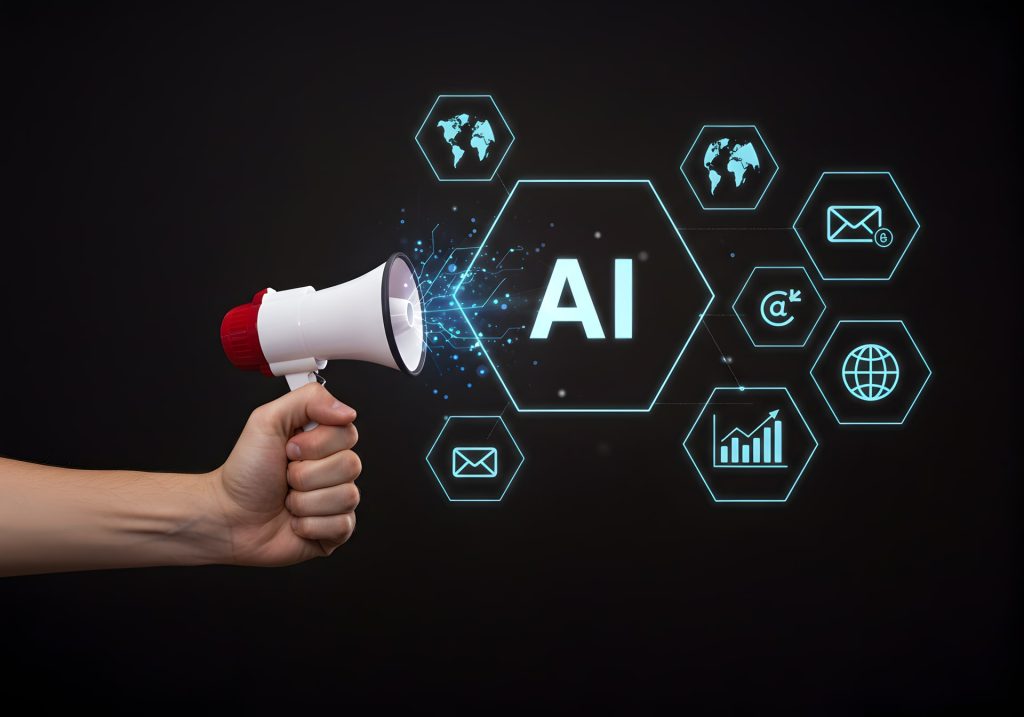
Artificial Intelligence in marketing refers to using machine learning, data analytics, and automation to make smarter, faster marketing decisions.
AI helps businesses:
- Analyze customer behavior.
- Automate repetitive tasks.
- Personalize content and offers.
- Predict trends and customer intent.
In other words, AI transforms marketing from a guessing game into a data-driven system that learns and improves continuously.
The Evolution of AI in Marketing

AI in marketing didn’t appear overnight—it evolved from years of digital transformation:
- 2010–2015: Automation tools like Mailchimp and HubSpot introduced basic personalization and segmentation.
- 2016–2020: Machine learning enabled smarter ad targeting and recommendation systems (think Netflix and Amazon).
- 2021–2025: Generative AI, led by technologies like OpenAI’s ChatGPT and image tools such as Midjourney, changed how marketers create and optimize content.
Today, AI touches every part of marketing—from planning to analytics, from SEO to customer service.
Core Applications of AI in Digital Marketing

1. AI-Powered Content Creation
AI tools now assist in brainstorming, writing, and optimizing content. Marketers use systems like Jasper and Writesonic to produce blog drafts, ad copy, or social posts in seconds.
AI even helps identify trending topics, suggest headlines, and structure SEO-friendly articles. But human editing remains essential for creativity, nuance, and brand voice.
Pro Tip: Use AI for idea generation and first drafts, then refine with your authentic expertise.
2. Predictive Analytics
AI analyzes patterns in customer data to predict future actions—like when a lead might convert or when churn risk is high.
Tools such as Google Analytics 4 and PaveAI convert raw data into actionable insights, helping small businesses target customers with perfect timing.
Predictive analytics enables smarter ad spend, reducing waste and increasing ROI.
3. Chatbots and Conversational AI
Chatbots powered by Dialogflow or ManyChat now handle lead generation, appointment scheduling, and customer support 24/7.
In 2025, customers expect instant replies—AI makes that possible without inflating costs.
Example: A salon uses an AI chatbot to book appointments through its website and social media DMs. The bot answers FAQs, shows pricing, and schedules available slots—freeing staff for real-world tasks.
4. Personalization at Scale
AI allows brands to tailor experiences to individual users—recommendations, emails, or even website layouts.
E-commerce sites like Shopify use AI algorithms to display personalized products based on browsing behavior. Likewise, email tools like Klaviyo customize subject lines and content based on user preferences.
Personalization drives higher conversions and customer satisfaction—because it feels human, even when powered by data.
5. Smart Advertising and Targeting
AI has revolutionized paid marketing. Platforms like Google Ads and Meta Ads Manager use AI to automate bidding, segment audiences, and test ad variations.
AI-driven systems determine the right audience, right time, and right message—making advertising far more efficient.
For small businesses, this levels the playing field against larger competitors with bigger budgets.
6. Voice Search and Visual Recognition
Voice and visual searches are powered by AI, changing how customers find products.
Optimizing for voice search (like we explored here) and using image recognition (e.g., Google Lens) helps businesses capture these new forms of search.
AI enables brands to interpret natural language and image data to understand intent more accurately than ever before.
Real-World Examples of AI in Action

1. Starbucks: Predictive Ordering
Starbucks uses AI in its “Deep Brew” platform to analyze order history, time of day, and location. The app then recommends drinks or upsells food items automatically. This personalization increased mobile sales significantly.
2. Sephora: Virtual Try-On
Sephora’s Virtual Artist uses AI and augmented reality to let customers “try on” makeup through their phones. The feature drives engagement and boosts purchase confidence.
3. Netflix: Personalized Recommendations
Netflix relies heavily on AI algorithms to suggest shows based on viewing behavior. It’s a masterclass in keeping users engaged through data-driven personalization.
These big-brand examples show what’s possible—but the same principles now apply affordably to small businesses.
How Small Businesses Can Use AI Today
You don’t need massive budgets or tech teams to start leveraging AI. Here’s how to get started:
- Content Creation: Use ChatGPT or Copy.ai to draft blog posts, ads, and email campaigns.
- Design: Create visuals and ads with Canva’s AI tools or Adobe Firefly.
- Automation: Use GoHighLevel CRM to automate email sequences, follow-ups, and appointment reminders.
- Analytics: Set up Google Analytics 4 for predictive insights.
- Customer Support: Deploy chatbots on your website with Tidio or ManyChat.
Each of these steps builds efficiency without sacrificing authenticity.
The Ethical Side of AI in Marketing

AI brings power—but also responsibility. As automation grows, so do ethical concerns around privacy, bias, and transparency.
Brands must ensure they:
- Use AI ethically and disclose automation where relevant.
- Avoid manipulating customers through algorithmic bias.
- Protect customer data in compliance with GDPR and similar laws.
Consumers are increasingly aware of data misuse—ethical marketing is not just right, it’s profitable.
Challenges of AI Adoption for Small Businesses

While AI opens doors, small businesses often face:
- Learning Curves: Understanding how to use AI tools effectively.
- Data Limitations: Smaller datasets can limit predictive accuracy.
- Over-Reliance: Using AI without human review risks generic or inaccurate output.
The key is balance—automate routine work but maintain human judgment for creativity, empathy, and ethics.
The Future of AI in Digital Marketing
In the next few years, expect deeper integration between AI, automation, and customer experience:
- Hyper-personalization: Websites that adjust dynamically per visitor.
- Predictive SEO: AI systems optimizing pages before rankings drop.
- AI-generated video content: Tools like Synthesia producing human-like video spokespeople.
- Multimodal AI: Combining text, voice, and image generation seamlessly.
AI is moving from a marketing assistant to a marketing partner—augmenting creativity rather than replacing it.
FAQs
Q1: Do I need coding skills to use AI in marketing?
No. Most modern AI tools are no-code or low-code with intuitive dashboards.
Q2: Can AI replace human marketers?
No. AI enhances efficiency, but strategy, storytelling, and empathy remain human strengths.
Q3: How expensive is AI for small businesses?
Many AI tools start free or cost less than $50/month.
Q4: What’s the best AI tool for marketing automation?
GoHighLevel CRM is an affordable all-in-one option for automations, funnels, and email.
Q5: Does AI affect SEO rankings?
Yes—AI helps create and optimize content faster, but human value still drives rankings.
Q6: Are there privacy risks with AI marketing?
Yes—always comply with GDPR and anonymize customer data.
Q7: What’s the future of AI-generated content?
It will blend with human editing for authenticity and depth.
The role of AI in digital marketing is no longer a prediction—it’s reality. From automating workflows to personalizing experiences, AI is empowering small businesses to compete smarter, not harder.
Adopting AI doesn’t mean replacing creativity—it means amplifying it. With the right tools and strategy, any business can create data-driven marketing that feels personal, human, and impactful.
If you’d like expert help integrating AI-powered marketing into your business—content, analytics, automation, and CRM—our team can help. Paired with GoHighLevel CRM, available for under $50/month, you’ll also gain automation tools that turn AI insights into conversions.
Contact us today to transform your digital marketing with AI.
Start Leveraging AI Today